Selfridges
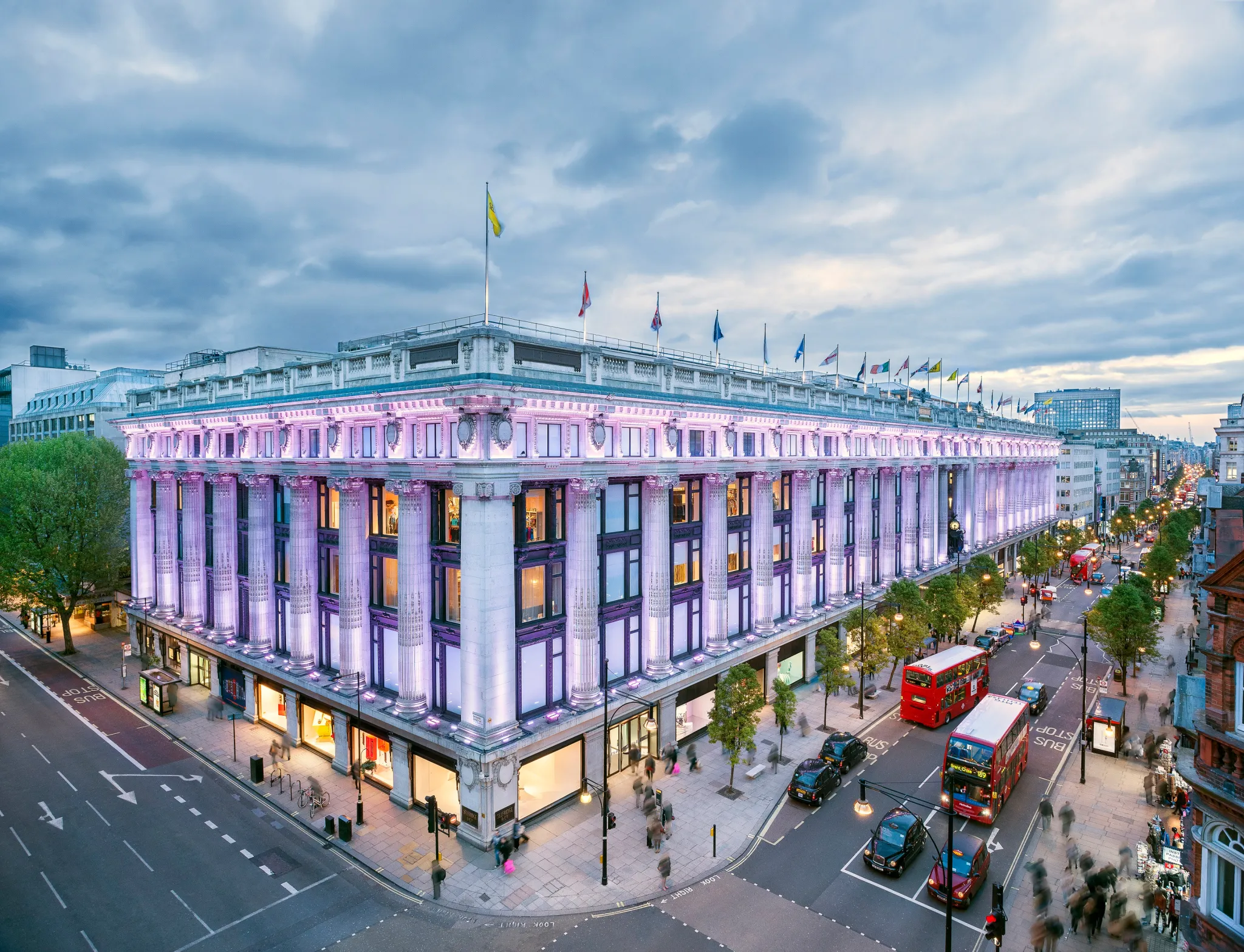
Harry Gordon Selfridge opened his Oxford Street store in 1909 and 42,000 people walked through the doors on day one. He'd spent 25 years at Marshall Field in Chicago learning what a department store could be, then crossed the Atlantic to build something better. Over a century later, the flagship is still the second largest department store in the UK. 540,000 square feet across five selling floors. The kind of building where you can buy a lipstick on the ground floor and a sofa on the fourth, and somehow the whole thing holds together.
We programme music across all four Selfridges stores. The London flagship. Birmingham, with its Future Systems facade of 15,000 aluminium discs that looks like nothing else on any high street in Britain. Manchester Exchange Square. The Trafford Centre. Each store has a minimum of eight curated zones, over 45 across the portfolio. That's 45 distinct spaces, each with its own character, its own customer, and its own rhythm through the trading day.
The ground floor of any Selfridges is beauty and fragrance. It's high energy, high footfall, and the first impression the store makes. Go up a floor and you're in designer fashion, where the mood shifts to something more considered. The food hall is a world of its own. The shoe galleries. The rooftop terrace in London. Each department attracts a different shopper in a different frame of mind, and the music has to acknowledge that without ever feeling like you've stepped into a completely different building.
Setting the Pace
What makes Selfridges interesting to programme is the pace. A department store at ten in the morning is not the same place at four on a Saturday afternoon. The breakfast crowd in the food hall gives way to the lunch rush. The ground floor builds steadily from quiet browsing to something that feels closer to a destination. Our scheduling reflects all of this, shifting energy levels across every zone through the day, the week, and the season.
Selfridges has always been a retailer that takes atmosphere seriously. They were doing experiential retail before anyone called it that. The creative residencies, the rooftop events, Project Earth. They understand that people don't come to Selfridges just to buy things. They come for the experience of being there. The music is part of that experience, and it has to be as carefully considered as the window displays, the visual merchandising, and the architecture itself.